Feedbacks
Arctic
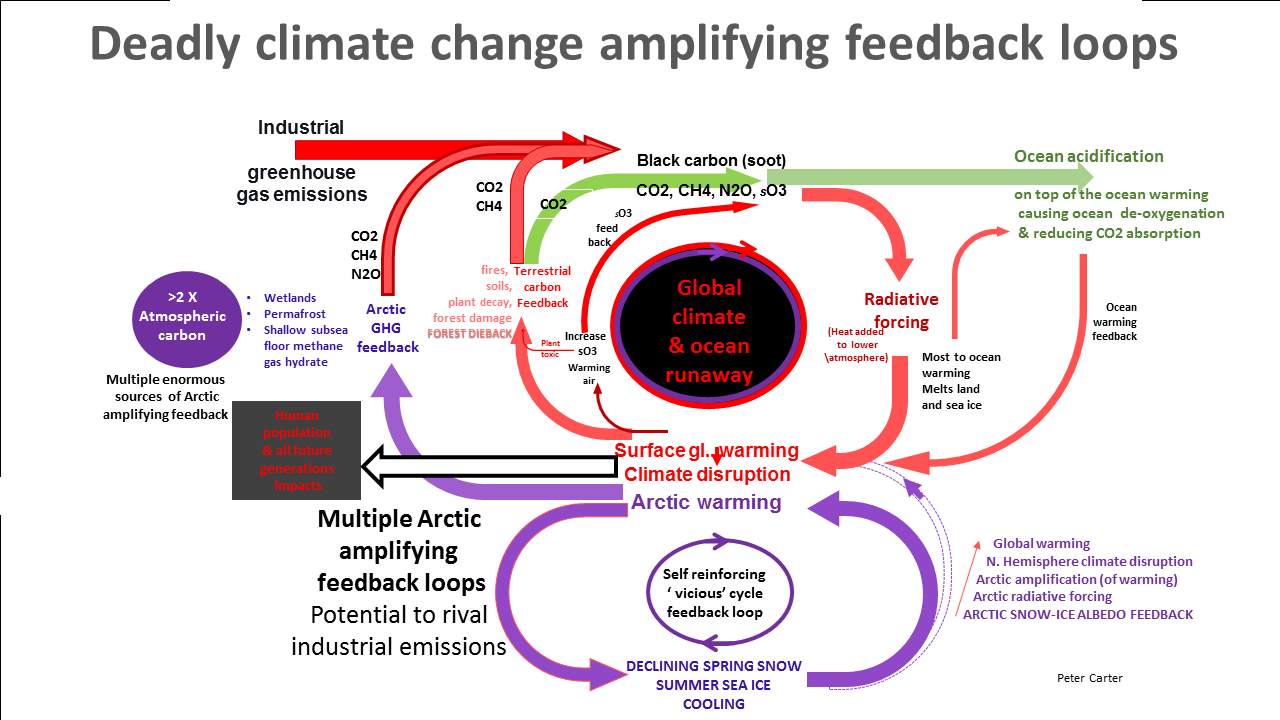
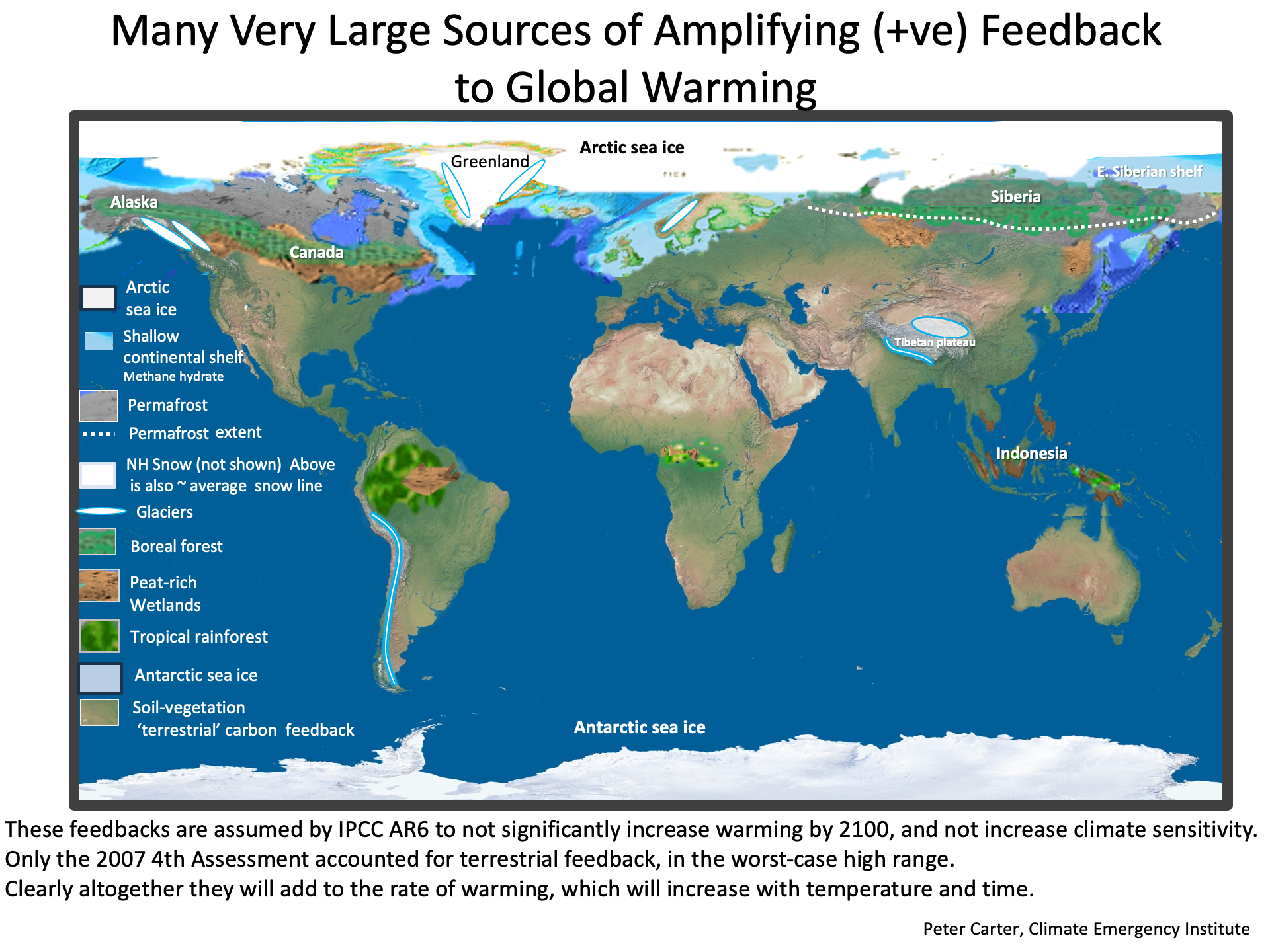
climate feedbacks Most of the largest feedback sources are Arctic.
These are the following.
o Melting back of subarctic spring-summer snow cover.
o Melting decline of Arctic summer sea ice extent.
o Warming far north peat lands - emits methane.
o Thawing permafrost - emitting methane & nitrous oxide.
o Melting sea floor Arctic methane hydrate - methane.
These are the following.
o Melting back of subarctic spring-summer snow cover.
o Melting decline of Arctic summer sea ice extent.
o Warming far north peat lands - emits methane.
o Thawing permafrost - emitting methane & nitrous oxide.
o Melting sea floor Arctic methane hydrate - methane.
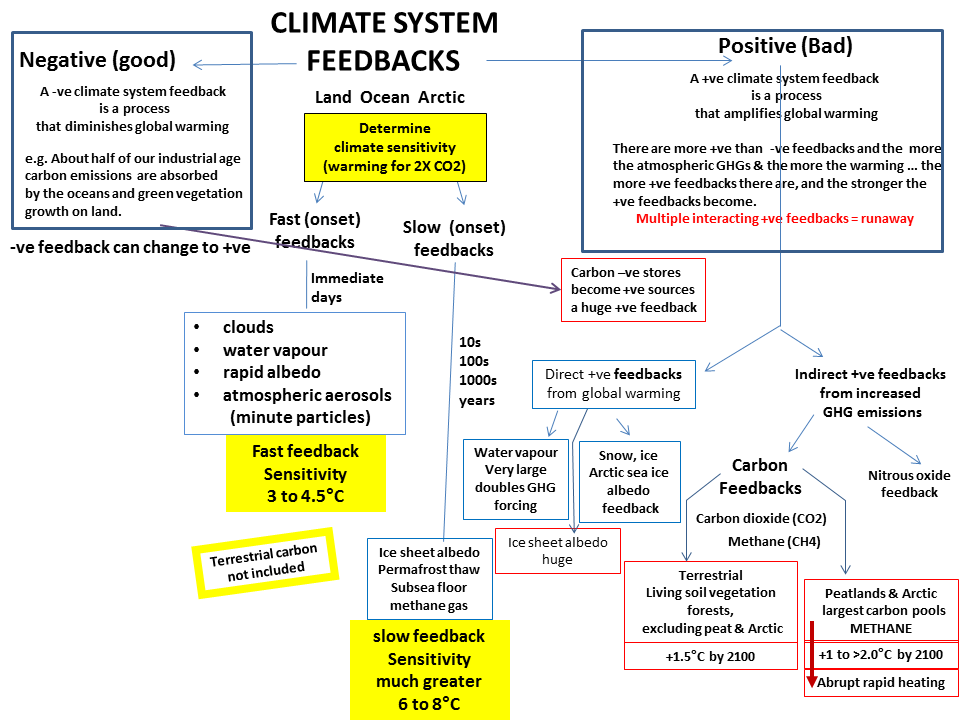
Positive and negative feedback There are two kinds of feedback in terms of amplifying warming called +ve and reducing warming (-ve). Global warming feedbacks are positive, amplifying.
We are most used to negative feedback systems used for safety. If a heater gets to hot there is a built -ve feedback that switches it off.
But in the climate system there is no such safety mechanism- feedbacks act in the dangerously +ve feedback way.
In the case of global climate change positive feedbacks to global warming lead to much more and faster global warming. The most complete list of such feedacks is Many risky feedback loops amplify the need for climate action, William J. Ripple et al., Feb. 2023.
Climate Emergency: Feedback Loops, a series of 5 short explanatory films
We are most used to negative feedback systems used for safety. If a heater gets to hot there is a built -ve feedback that switches it off.
But in the climate system there is no such safety mechanism- feedbacks act in the dangerously +ve feedback way.
In the case of global climate change positive feedbacks to global warming lead to much more and faster global warming. The most complete list of such feedacks is Many risky feedback loops amplify the need for climate action, William J. Ripple et al., Feb. 2023.
Climate Emergency: Feedback Loops, a series of 5 short explanatory films
In short Global warming causes more global warming
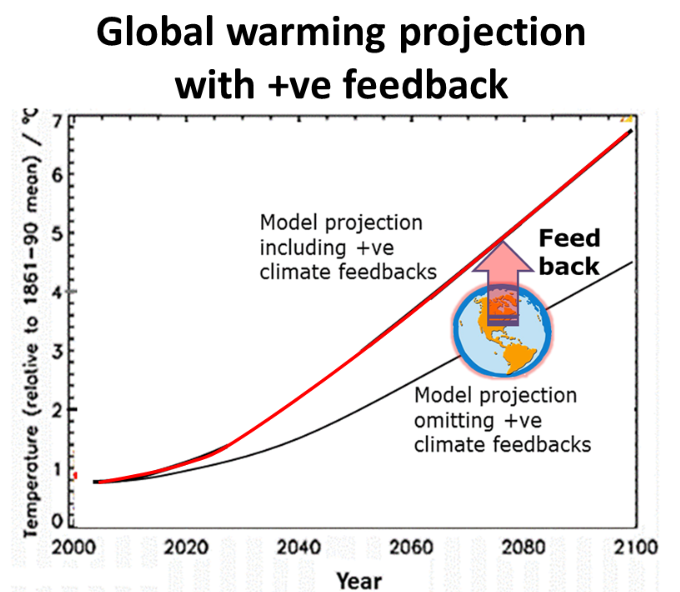
Furthermore the increased warming accelerates over time and temperature.Climate system +ve feedback is a global warming impact multiplier.
Considering all the feedbacks the +ve feedbacks are incomparably larger the -ve, and the more the warming the larger the +ve feedbacks (and not -ve).
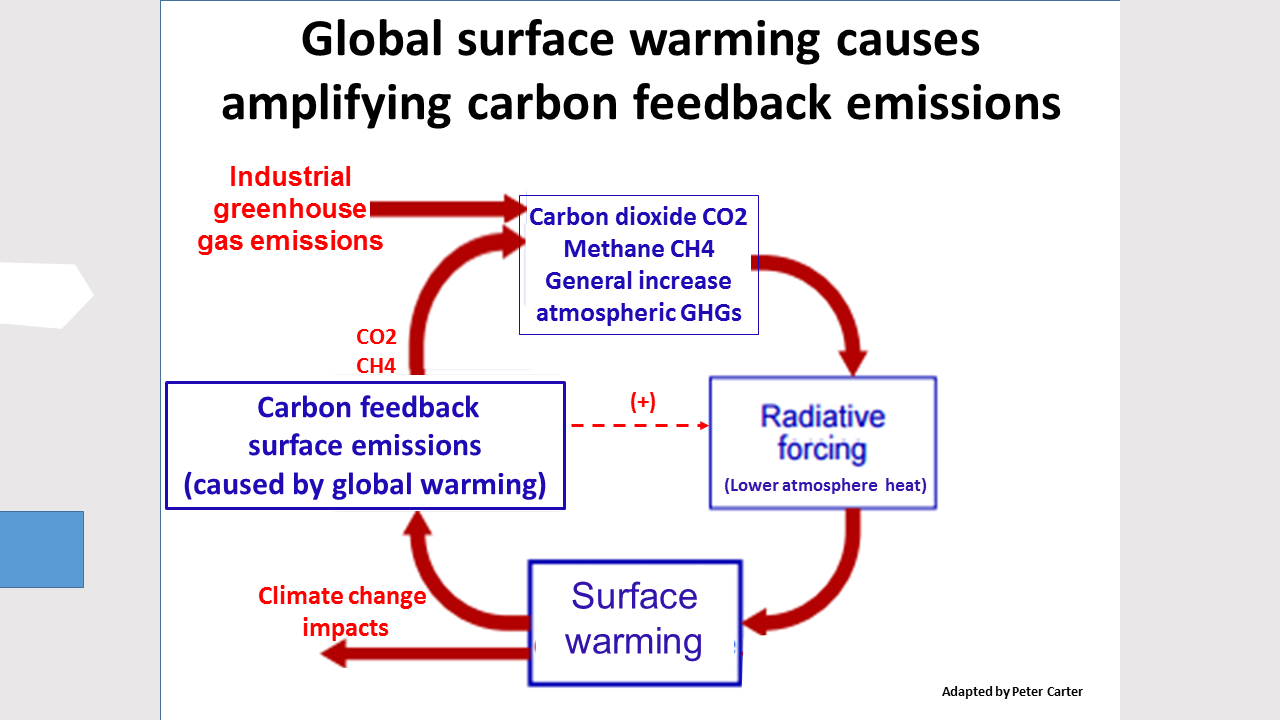
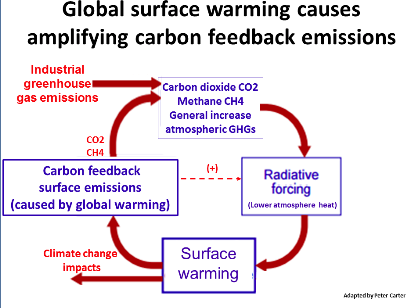
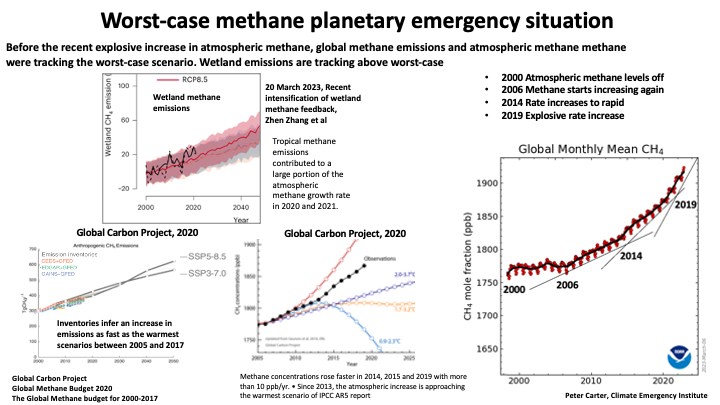
Positive feedbacks that operate by the planet emitting more carbon dioxide (CO2) or methane (CH4) are +ve carbon (cycle) feedbacks.By definition positive carbon feedback is the greatest risk caused by global warming - because our industrial global warming responds by emitting carbon GHGs CO2 and methane and that boosts global warming more that increases carbon feed back even more etc... - in the ultimate vicious cycle.
There are a great many of the +ve feedbacks and Earth has vast pools (stores) of carbon vulnerable to global warming- the largest being Arctic. The warming planet emits CO2 methane and nitrous oxide- thawing permafrost is doing all this now.
Climate system positive feedbacks or loops tend to be self perpetuating and accelerating making them catastrophically dangerous. One positive feedback may increase one or more other positive feedbacks - 'cascading' feedbacks, which leads to runaway rapid warming.The big example is the Arctic involving Arctic methane.
The melting of glaciers forms deep channels of water torrents and lake at the glacier base lubricating its retreat.
Fast and Slow feedbacksThere are 2 sorts of feedbacks in terms of their speed of response.Fast feedbacks (or Charney feedbacks) are the only ones accounted for by the IPPC in global warming projections are the fast feedbacks.These act on an immediate time scale and are water vapor, clouds (+ve & -ve) aerosols (+ve and -ve). latest research confirms the strong water vapor feedback and that clouds have a net positive (bad) feedback
Water vapor is a GHG and the largest +ve feedback. It about doubles the warming caused by a GHG alone.Warm air holds more water as global warming increases so amplifying the global warming by a factor of 2 for warming by GHG alone.It is a fast feedback
Slow feedbacks are much slower to respond to warming, but as they do they are very large and can lead to catastrophic rates of accelerating degrees of warming.
They are the albedo cooling loss from the loss of ice sheets, warming wetland peat (high carbon), thawing permafrost (CO2 CH4 N2O) and possibly sub sea floor methane.
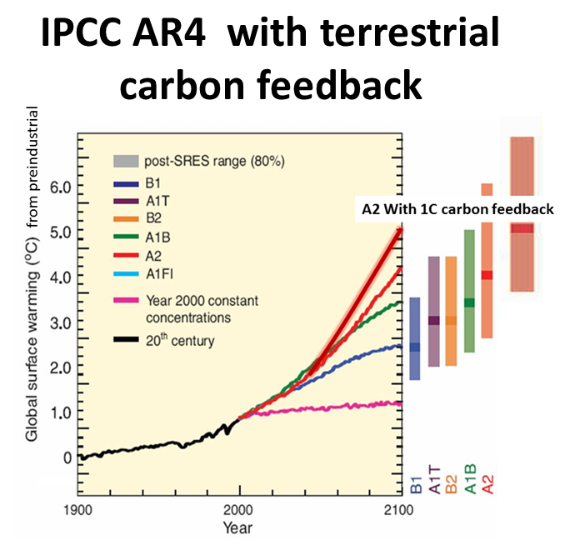
These large slow feedback are excluded by the IPCC global warming projections in the assessments.
They are also not included in the calculation of the all important climate sensitivity.
Several feedbacks involve tipping points,
In short Global warming causes more global warming
Furthermore the increased warming accelerates over time and temperature.Climate system +ve feedback is a global warming impact multiplier.
Considering all the feedbacks the +ve feedbacks are incomparably larger the -ve, and the more the warming the larger the +ve feedbacks (and not -ve).
Positive feedbacks that operate by the planet emitting more carbon dioxide (CO2) or methane (CH4) are +ve carbon (cycle) feedbacks.By definition positive carbon feedback is the greatest risk caused by global warming - because our industrial global warming responds by emitting carbon GHGs CO2 and methane and that boosts global warming more that increases carbon feed back even more etc... - in the ultimate vicious cycle.
There are a great many of the +ve feedbacks and Earth has vast pools (stores) of carbon vulnerable to global warming- the largest being Arctic. The warming planet emits CO2 methane and nitrous oxide- thawing permafrost is doing all this now.
Climate system positive feedbacks or loops tend to be self perpetuating and accelerating making them catastrophically dangerous. One positive feedback may increase one or more other positive feedbacks - 'cascading' feedbacks, which leads to runaway rapid warming.The big example is the Arctic involving Arctic methane.
The melting of glaciers forms deep channels of water torrents and lake at the glacier base lubricating its retreat.
Fast and Slow feedbacksThere are 2 sorts of feedbacks in terms of their speed of response.Fast feedbacks (or Charney feedbacks) are the only ones accounted for by the IPPC in global warming projections are the fast feedbacks.These act on an immediate time scale and are water vapor, clouds (+ve & -ve) aerosols (+ve and -ve). latest research confirms the strong water vapor feedback and that clouds have a net positive (bad) feedback
Water vapor is a GHG and the largest +ve feedback. It about doubles the warming caused by a GHG alone.Warm air holds more water as global warming increases so amplifying the global warming by a factor of 2 for warming by GHG alone.It is a fast feedback
Slow feedbacks are much slower to respond to warming, but as they do they are very large and can lead to catastrophic rates of accelerating degrees of warming.
They are the albedo cooling loss from the loss of ice sheets, warming wetland peat (high carbon), thawing permafrost (CO2 CH4 N2O) and possibly sub sea floor methane.
These large slow feedback are excluded by the IPCC global warming projections in the assessments.
They are also not included in the calculation of the all important climate sensitivity.
Several feedbacks involve tipping points,
UCAR Climate Feedback Loops and Tipping Points
Global Warming 101 Inertia, Feedbacks, & Tipping Points
9 min VIDEO
9 min VIDEO
Ice cores show that warm interglacial periods are from feed-back emissions triggered by a tiny increase in insolence Causal feedbacks in climate change
The Arctic has switched from carbon sink to source with accelerating Arctic permafrost feedback underway(NOAA 2019 Arctic Report Card)
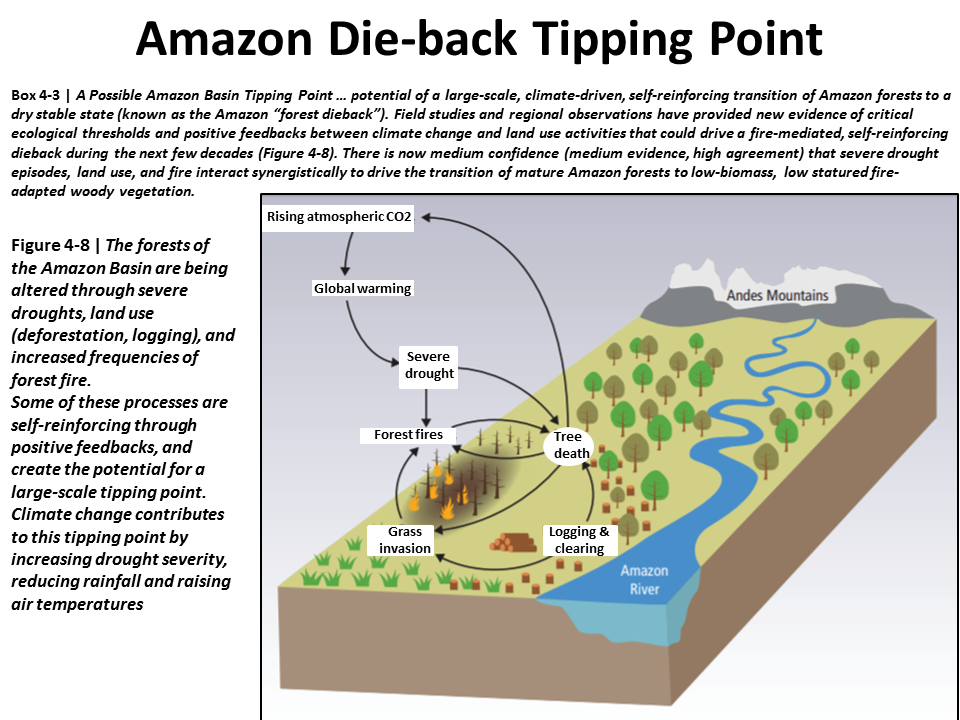
Amazon is now a carbon source confirmed ( 2021)
2021 VIDEOs Climate Emergency Feedback
+ve feedback means amplifying (bad)
The Arctic holds most of the largest amplifying feedback sources, and the Arctic is warming 3-4 times the rest of the planet
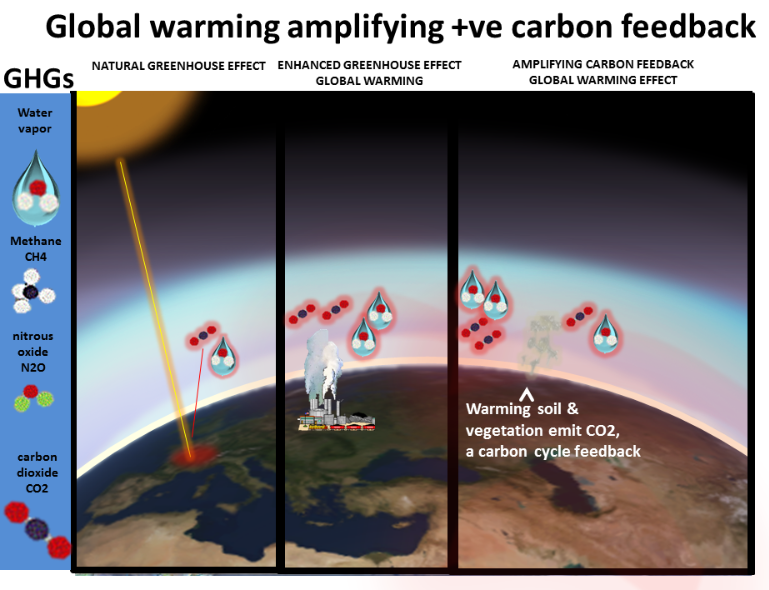
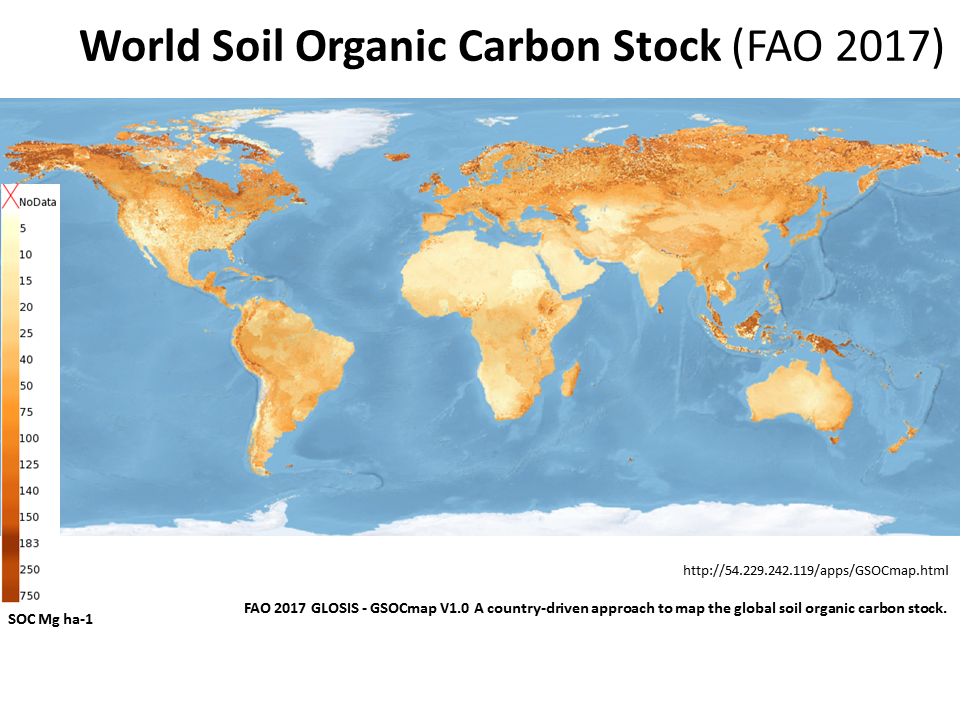
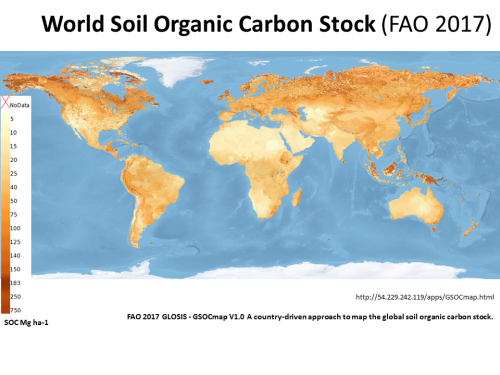
Warmed soils emit more CO2 (carbon feedback)

Climate Emergency Insitute