Sea Level Rise
Climate Emergency Institute
Greenland is losing ice at the fastest rate in 350 years
There has been a six-fold increase in polar ice losses since the 1990s
There has been a six-fold increase in polar ice losses since the 1990s
Combined losses from both ice sheets peaked at 552 billion tonnes per year in 2010 and averaged 475 billion tonnes per year for the remainder of the decade. The peak loss coincided with several years of intense surface melting in Greenland.
Antarctica and Greenland are now losing ice five and seven times faster than they were in the 1990s, respectively.
Antarctica and Greenland are now losing ice five and seven times faster than they were in the 1990s, respectively.

Antarctic Ice-sheet retreat initiated by the thinning and loss of buttressing ice shelves continues for centuries, regardless of bedrock and sea-level feedback mechanisms (or geoengineered carbon dioxide reduction).
The West Antarctic ice sheet is destabilized
Unstoppable sea-level rise from Antarctica may be triggered at 1.5°C-2°C.
Irreversible loss of the Greenland ice sheet could be triggered by warming of 1.5°C
The West Antarctic ice sheet is destabilized
Unstoppable sea-level rise from Antarctica may be triggered at 1.5°C-2°C.
Irreversible loss of the Greenland ice sheet could be triggered by warming of 1.5°C
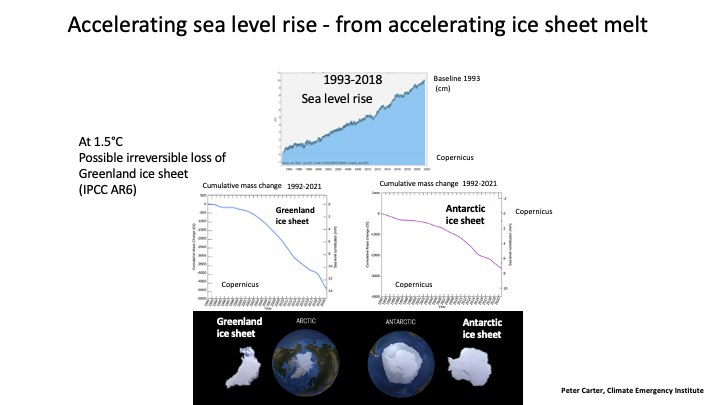
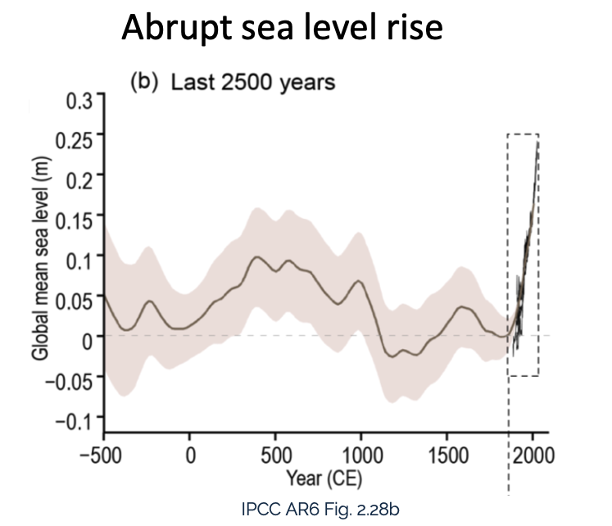
Sea level rise is being caused by GHG missions in two ways- the thermal expansion water and melting of sheets. Most is now increasingly caused by ice sheet melting.
Sea level rise is a relatively slow climate change impact, but a very long term effect of global warming. It is slow enough that adaptation is possible. Sea level starts to rise slowly; but in the long run, sea-level rise caused by fossil-fuel burning today could inundate many coastal cities and wipe entire island nations off the map.
Low lying islands are being affected already - more so with storms
King tides along low coast lines are starting to have an affect.
Sea level rise is a relatively slow climate change impact, but a very long term effect of global warming. It is slow enough that adaptation is possible. Sea level starts to rise slowly; but in the long run, sea-level rise caused by fossil-fuel burning today could inundate many coastal cities and wipe entire island nations off the map.
Low lying islands are being affected already - more so with storms
King tides along low coast lines are starting to have an affect.
Double click here to edit this text.
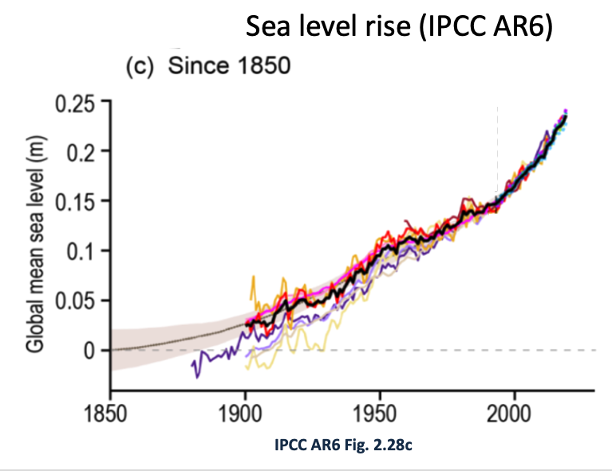
Sea level rise is accelerating.
Warming of ocean water expands it, which indicates ocean heat.
Most of the rise is now from melting ice sheets, which indicates enormous global surface warming heat.
Warming of ocean water expands it, which indicates ocean heat.
Most of the rise is now from melting ice sheets, which indicates enormous global surface warming heat.

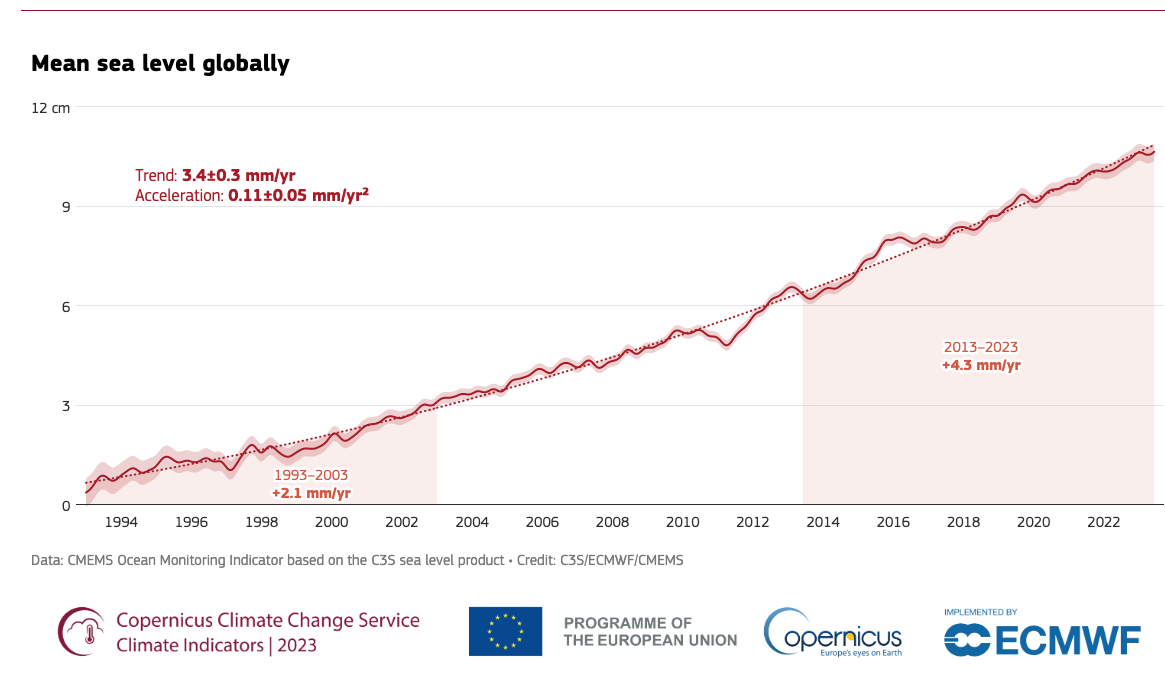
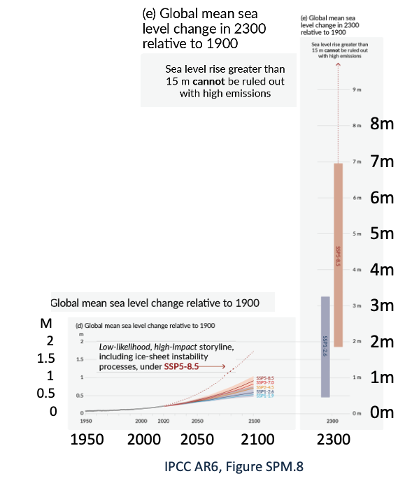
In the IPCC AR6 sea level projections for the year 2100 were adjusted upwards (again).
A new high-end risk scenario was included, stating that a global rise
“approaching 2 m by 2100 and 5 m by 2150 under a very high greenhouse gas emissions scenario cannot be ruled out due to deep uncertainty in ice sheet processes
Last 2500 years
IPCC AR6
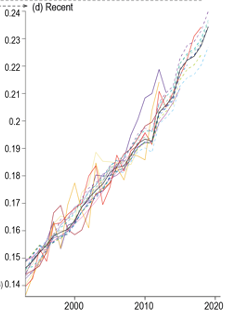
IPCC AR6 WG1,Figure 2.28
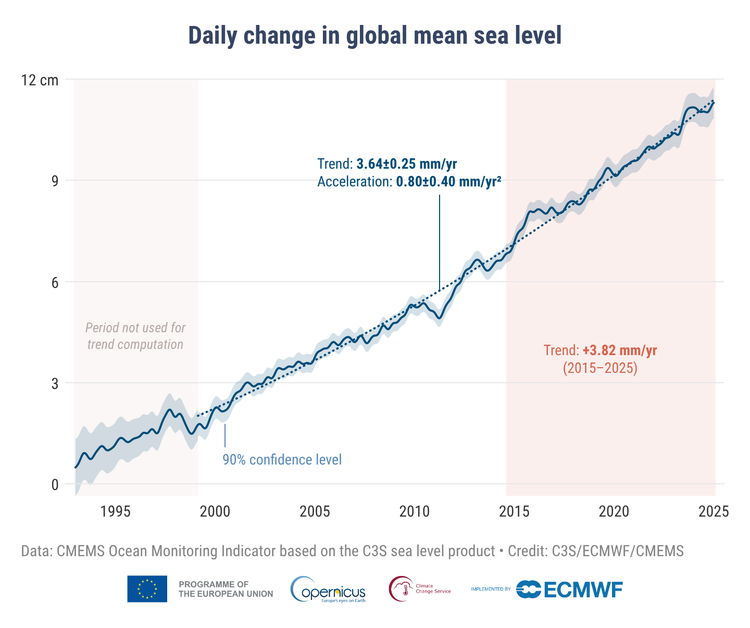
Copernicus 2025
Accelerating sea level rise
IPCC AR6
Warming of +1.5 °C is too high for polar ice sheets
Chris R. Stokes et al, 20 May 2025